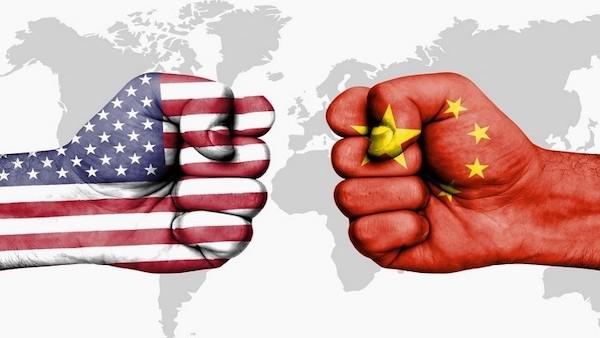
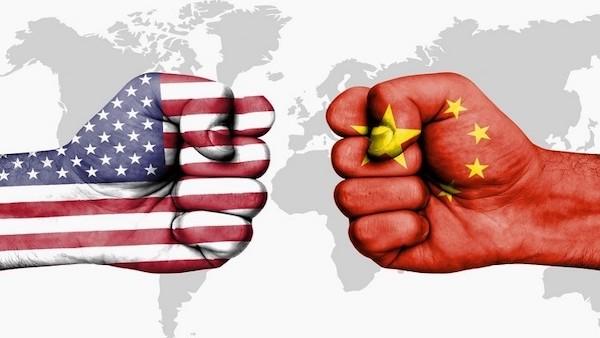
Authored by Doug Casey via InternationalMan.com, The Chinese came from nothing; only 40 years
ago, they had nothing but a billion impoverished peasants. No money. No
technology. No power. Today, they’re on par with the United States. But, if this trend continues – which it will – their economy will be triple the size of the US economy in 20 years.
中国は本当に無から出発した;40年前には本当に何もなく、何億人の貧しい農奴しかいなかった。マネー無し。技術なし。力なし。現在では、彼らは米国と肩をならべるまでになった。しかし、もしこのトレンドが続くならーーそうなりそうな気配だがーー彼らの経済規模はあと20年で米国の3倍にもなる。 Not just a trade war, but a shooting war with the Chinese seems inevitable.
これは貿易戦争ではない、むしろ中国とは実弾の飛び交う戦争が不可避に見える。
Because when tensions build up between states they eventually fight with each other. China is the major rising power. It’s
got four times the US population, it’s soon going to be more
economically powerful, and it’s going to reach military parity. It’s of a
different culture than the US. The US government may figure it’s best
to take them out while the balance still favors them. It’s a bit like
the situation was with the USSR in the ’80s. They could see they were
going into decline, and some Soviet generals figured it was “now or
never” for a successful war. Fortunately they collapsed first.
The Chinese don’t like seeing US aircraft carriers off their coast
any more than we would like to see Chinese aircraft carriers in the Gulf
of Mexico or off Santa Catalina Island.
The last thing that we need is a war with the Chinese.
But if something that’s been called the Thucydides Trap is valid – and I
think it is – then it’s highly likely. It refers to the Peloponnesian
War between Athens and Sparta, at the end of 5th century BC. The Trap is
sprung when a reigning power strikes out at the advancing power while
they still have a chance of winning.
The American military thinks that a shooting war is inevitable. And
it probably is. Why? Well, 5,000 years of history teaches us that it’s
better to start a war when you’re more powerful than your enemy rather
than wait until they’re more powerful than you. It’s always been this
way. The Golden Rule of statecraft is: Do unto others – but do it first.
It’s a very dangerous situation.
The US may do something stupid, like fabricate an incident, and
launch a preemptive strike against China. Or perhaps things just get out
of control, as they did in World War I.
The wars between European powers were bad enough. But when the US
fought Japan it actually turned into a race war. What happened in the
Pacific was far uglier than what happened in Europe. There were
basically no prisoners taken. The next big war – as opposed to a sport war, like those in
the Middle East – is likely to be with China. That could make World War
II look trivial by comparison. 欧州列強の間の戦争はひどいものだった。しかし米日戦争ではこれは民族間戦争となった。欧州戦線よりも太平洋戦争で起きたことは醜かった。基本的に捕虜なんていなかったのだ、お互い死ぬまで戦う。次の大戦ではーー中東のような武力紛争というものではなくーー中国とのものだ。こうなると第二次世界大戦など比較にならないほど些細なものに見えるだろう。
The Next Financial Crisis Will Be “The Big One”
次の金融危機は「大物」になるだろう。
Nobody has a crystal ball, but I think you can see the dominos lining up. Will
this be the big one, or will it just be another recession – an
inconvenience, followed by even bigger bubbles? It’s a question of odds.
And the more dominos that lineup – the political, economic, social,
demographic, military, and cultural dominos – the more logical that this
next one is going to be much bigger than what happened in 2008.
That’s why I use the analogy of 2007-2010 being the leading edge of
this hurricane. We’ve had a very big eye of the storm because of
absolutely massive money printing by central banks all over the world.
It’s had the effect of throwing oil on the water.
When we go into the trailing edge of this hurricane, it’s going to be
much worse, much different, and much longer lasting than the
unpleasantness of 2007-2010. Why? Because that was caused by inflation
and debt. We’ve had vastly more of that over the last decade to paper
over the problems. I think we’re re-entering the hurricane now.
But there’s always some good news. Here the good news is that
most of the real wealth in the world – skills, technologies, buildings,
things of that nature – won’t disappear just because the economy
collapses. Most of the real wealth will still be here. It’s just going
to change ownership. しかしいつものことながら良い知らせもある。今回の良い知らせとは、多くの世界の実資産ーースキル、技術、建物、自然ーーどれもが経済崩壊で消え去るわけではない。多くの実資産は生き残るだろう。単にその持ち主が変わるだけだ。
I look forward to moments of crisis – assuming that the system itself
is maintained in more or less its present form. In other words, it’s
possible to look forward to a financial crisis, if you can position
yourself to weather it. Financial crises come and go. It’s possible to
position yourself to profit from a financial crisis.
I’m not, however, looking forward to an economic crisis, or a
political crisis. Those can have major consequences. And I’m absolutely
not looking forward to a cultural crisis, which is by far the most
serious kind. Unfortunately, that is what we’re facing at this point.
Let’s just hope that what’s coming this time, over the next few
years, is limited to a financial crisis. But I don’t expect that’s the
case. I think it’s going to be economic, political, and cultural as
well.
* * * If the trade war between China and the US turns into a shooting
war, a complete economic collapse is sure to follow. That’s why we’re
sharing our field guide to Surviving and Thriving During an Economic
Collapse. Click here to download your free PDF copy now.
How Are Gold And Money Supply Related? by Tyler Durden Sun, 06/14/2020 - 13:00 Authored by Mike Shedlock via MishTalk, M2 Money Supply is surging. Will gold follow? M2マネーサプライが急増している。ゴールドはこれを追従するだろうか? Let's investigate an alleged relationship between gold and M2, a measure of money supply in the US. よく言われるM2(米国のマネーサプライ指標)とゴールドの関係について調べてみよう。 "There’s a clear correlation between the annual growth rate in M2 money supply and the price of the yellow metal. " 「M2の年率増加速度とゴールド価格の間には明らかな相関がある。」 Clear Correlation? 明らかな相関? The Tweet claims something different than my lead chart depicts. So let's investigate the above idea in other time frames. このツイートの主張は私が示す最初のチャートが示すものとは異なる。というわけでこのtweetの主張を別の時間フレームで見てみよう。 Gold vs Rate of Change in M2 Money Supply ゴールド vs M2マネーサプライの変化率 If we look at longer time frames, the rate of increase in M2 theory falls flat on its face....
Is The Stock Market As Confused As You Are About A Recession? Written by Lance Roberts | Apr, 1, 2019 Last week, Barron’s ran an article entitled “The Stock Market Is Just As Confused About A Potential Recession As You Are?” To wit: 先週バロンズにこういう記事が掲載された「株式市場は景気後退を予感させるほどに混乱しているだろうか?」見てみよう: “Investors have long used where we are in the economic cycle to decide which stocks to buy and sell. New research from Nomura’s Joseph Mezrich flips that on its head by showing how investors can use stock performance to help determine where we are in the cycle. Too bad the market is sending mixed messages right now.” 長らく投資家は現在景気サイクルのどこに居るかを見てこの株式を売るか買うかを判断してきた。野村證券のJoseph Mezrichの最近の研究では、これが逆さで、投資家は株式のパフォーマンスを見て今景気サイクルのどこにいるかを判断している。最悪なことに現在相場は悪化改善混在のメッセージを送っている。」 But let’s be clear here; no one wants the party to end. So, despite a struggling stock market over the last year, slowing economic growth, and a collapsing yield curve, there are s...