We noted last
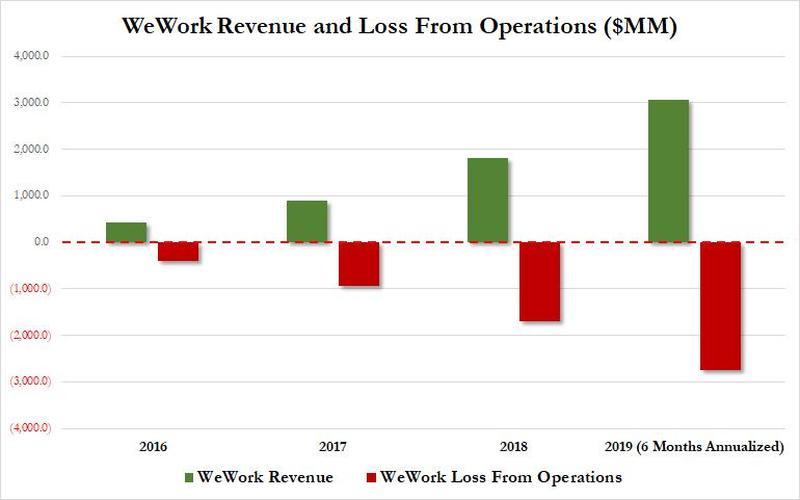
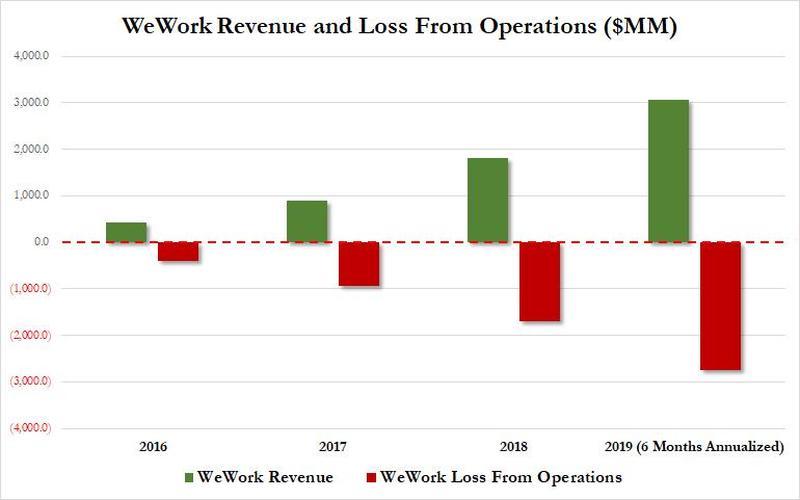
month that the company lost $690 million in the first six months of the
year and is expected to generate a loss from operations approaching $3
billion as it burns through tens of millions in cash daily. Analyst
estimate that the company could run out of money by mid-2020.
And now Bloomberg is reporting that WeWork's cash crunch is even more acute:
今日のブルームバーグの報告によるとWeWorkの資金枯渇はもっと差し迫るという:
Analysts had previously estimated that the company would run out of money by the middle of next year.
WeWork had been counting on an initial public offering -- and a $6
billion loan contingent on a successful IPO -- to meet its cash needs,
but that plan unraveled amid questions about its future profitability...
...it needs new financing before the end of November to avoid running out of money, two people familiar with the matter said.
・・・資金枯渇を回避するには11月末までに新たな資金提供元が必要だ、二人の情報通が言う。
FT sources are now indicating that a potential lifeline, otherwise known as a bailout, could be imminent. FTの情報源は現在潜在的な救済元だ、ほかでもない緊急援助、これが差し迫っている。
The bailout of WeWork could be led by JPMorgan Chase and other Wall
Street banks. If no cash infusion by late November, WeWork could enter
into bankruptcy in 1H20, or by next summer.
Global credit rating agency Fitch Ratings downgraded WeWork's credit
rating last week by two notches to "CCC+," putting the SoftBank funded
office-sharing company very deep into junk territory.
"In the absence of an IPO and associated senior secured debt
raise, WeWork does not have sufficient funding to meet its growth plan," Fitch wrote in a note.
Last month's decision to abandon the IPO deprived the company of $3
to $4 billion in funding and $6 billion in a loan package investment
banks promised if it went public.
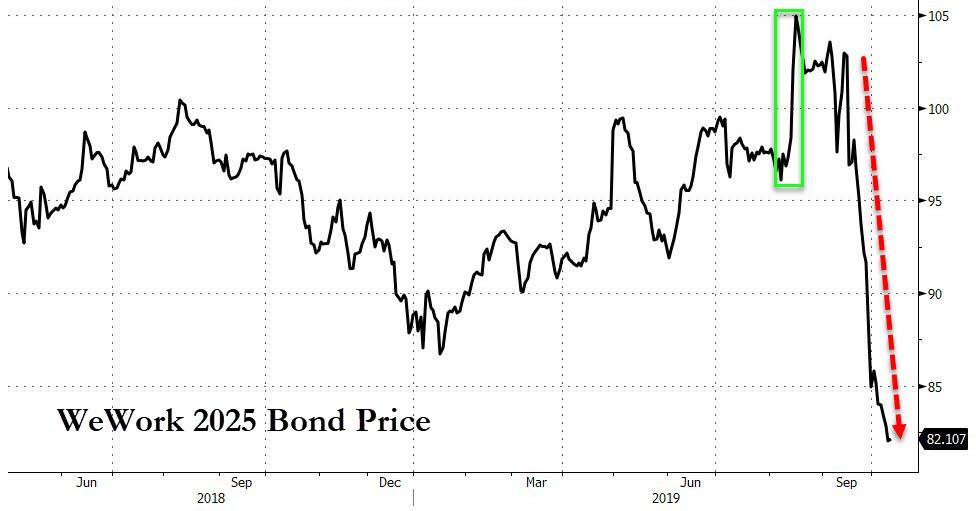
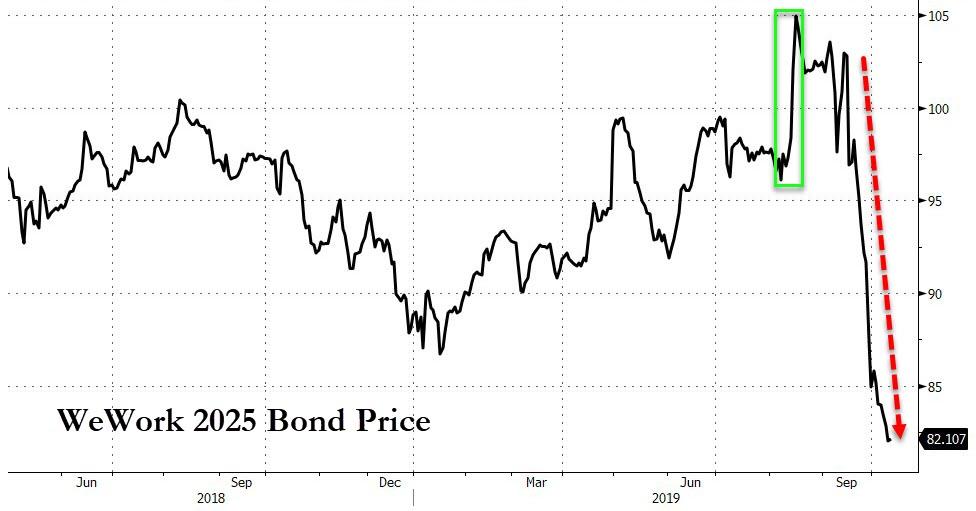
Since the IPO was pulled and valuations collapsed, WeWork's WE 7.875 01-MAY-2025 junk
bond was last trading at about 82 cents on the dollar (as of Friday 6
am est., according to Tradeweb data, a massive discount to face value,
which indicates doubts the company can repay its debts.
IPOがなくなり、格付けも崩壊し、WoWorkの WE 7.875 01-MAY-2025ジャンクボンドは直近で82セントで売買されている、額面1ドル(東部時間金曜6am、Tradewebのデータだ、額面から大幅に値引きされている、ということは当社が債務を返済できないだろうと見られている。
Without new cash, WeWork is unsustainable; the company could start
liquidating its CRE exposure as it begins the inevitable pre-bankruptcy
shrinking process -- if no cash infusion next month.
"WeWork has raised more than $12 billion to rent office space that it
renovates and then leases to companies. But that strategy has left it
in a precarious position. It has some $47 billion of future rent payments due. On
average it leases its buildings for 15 years. Yet its tenants are
committed to paying only $4 billion, and on average have leases for 15
months."
「WeWorkは$12B以上の資金を投じてオフィススペース改装を行い企業に貸し出す。しかし その戦略は心もとないものだ。将来の賃貸料収入は$47B程度だ。平均してビルを15年貸し出す。しかしながら、テナントが約束する支払いはわずか$4Bだ、そして平均貸し出しは15ヶ月に過ぎない。
With the equity market window shut, and credit markets starting to crack, something that we noted on Thursday, the next question is if WeWork gets a bailout next month.
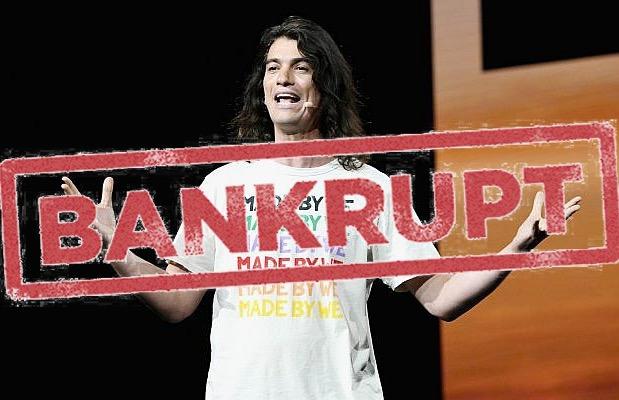
If not, the WeWork implosion of 2020 could be a spectacular mess and a massive headache for SoftBank/Vision Fund and Wall Street banks - as the company crashes from $47 billion valuation to insolvent in 2 months...
Amazonで買物をしてContrarianJを応援しよう この長文記事をRay Dalioが発表し、ゴールドは$1400から$1420へと急騰しました。GLD保持高に変化はないのでたぶん先物ポジションが進んでいます。 Ray Dalio Warns A "New Paradigm" Is Coming: "Buy Gold, Sell Stocks" by Tyler Durden Wed, 07/17/2019 - 14:44 Authored by Ray Dalio via LinkedIn, One of my investment principles is: 私の投資原則はこういうものだ: Identify the paradigm you’re in, examine if and how it is unsustainable, and visualize how the paradigm shift will transpire when that which is unsustainable stops. 現在のパラダイムを認識し、それがどの程度持続可能かどうか判断する、そしてパラダイムシフトがどのように起きるか、そしてその着地点を思い描く。 Over my roughly 50 years of being a global macro investor, I have observed there to be relatively long of periods (about 10 years) in which the markets and market relationships operate in a certain way (which I call “paradig...
Amazonで買物をしてContrarianJを応援しよう 記事を紹介しようと訳を入れている間にFOMCが過ぎてしまいタイミングを逸してしまいました、前半は読み飛ばしてください。後半部分に関して、日本では一般会計と特別会計が別れていて政府財政がわかりにくいですが、米国は分離されておらず年金会計がより鮮明になります。$70Tって邦貨でいうと約7000兆円ですからね。 Whistling Past The $70 Trillion Debt Graveyard 07-26-19 Written by Lance Roberts | Jul, 27, 2019 Last week, we discussed the setup for a near-term mean reversion because of the massive extension above the long-term mean. To wit: 先週には、私どもは短期的な平均回帰のし掛けが出来上がっていることを議論した、というのも現在長期的な平均から極端に乖離しているからだ。見てみよう: “There is also just the simple issue that markets are very extended above their long-term trends, as shown in the chart below. A geopolitical event, a shift in expectations, or an acceleration in economic weakness in the U.S. could spark a mean-reverting event which would be quite the norm of what we have seen in recent years.” 「とてもかんたんなことだが、市場は長期的なトレンドからあまりに極端に上方乖離している、それは下のチャートを見れば明らかだ。地政学的出来事、期待値の変化、もしくは米国経済の弱さが加速するなら、平均回帰を引き起こすだろう、それは過去数年でみた典型的な相場の動きだ。」 This analysis is ...
多量のオピオイドを米国に送り込み、米国で深刻な麻薬中毒問題を引き起こしています。現代版「阿片戦争」です。あのトヨタ初の女性取締役もオピオイド中毒で逮捕解任されましたよね。 US Is Dependent On China For Almost 80% Of Its Medicine by Tyler Durden Fri, 05/31/2019 - 12:55 Experts are warning that the U.S. has become way too reliant on China for all our medicine , our pain killers, antibiotics, vitamins, aspirin and many cancer treatment medicine. 専門家はこう警告する、米国はすべての医薬品、痛み止め、抗生物質、ビタミン、アスピリン、各種抗がん剤で、中国依存度が高すぎる。 Fox Business reports that according to FDA estimates at least 80 percent of active ingredients found in all of America’s medicine come from abroad, primarily from China . And it’s not just the ingredients, China wants to become the world’s dominant generic drug maker. So far Chinese companies are making generic for everything from high blood pressure to chemotherapy drugs. 90 percent of America’s prescriptions a...
米国はよく理解してませんが、日本の場合では量的緩和で日銀が国債買い上げした資金は日銀当座預金にそのままです、市中には流れていません。でもNHKのニュース等では「ジャブジャブ」という表現をアナウンサーが使い、さらに丁寧に水道の蛇口からお金が吐き出される画像まで示してくれます。これって心理効果が大きいですよね。量的緩和とは何かを7時のニュースや新聞でこれ以上丁寧に解説するのはそう簡単ではありません。一般の人も株式をやっている人も「イメージ」で捉える以上はそう簡単にできません。多くの人は量的緩和とはなにか、を理解していないと私は想像しています。 ただし、国債を買い上げるので長期金利が低下し住宅ローン金利等が下がったのは確実な効果です。一方で長短金利差が少なくなると銀行のビジネスモデルが成り立たなくなりますが。 This Is The One Chart Every Trader Should Have "Taped To Their Screen" by Tyler Durden Sat, 01/19/2019 - 18:55 After a year of tapering, the Fed’s balance sheet finally captured the market’s attention during the last three months of 2018. 一年間のテーパリング後、FEDバランスシートがとうとう市場の注目をあびることになった、2018年の最後の3ヶ月だ。 By the start of the fourth quarter, the Fed had finished raising the caps on monthly roll-off of its balance sheet to the full $50bn per month (peaking at $30bn USTs, $20bn MBS...